
What Is Synastry? How Astrology Explains Relationship Compatibility
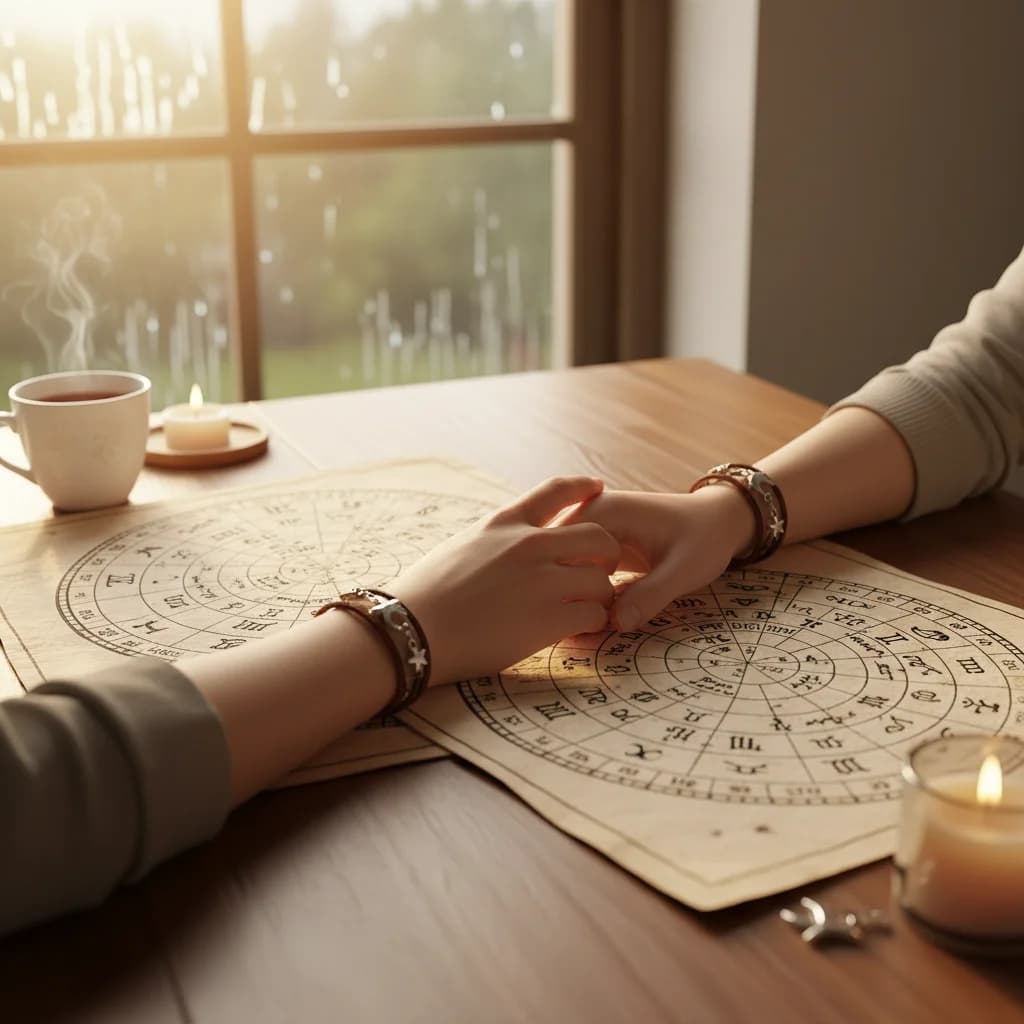
Have you ever met someone and felt an instant, undeniable connection, or perhaps an inexplicable tension? Astrology offers a profound lens through which to understand these intricate dynamics, and the key lies in a technique called synastry. Synastry is the art and science of comparing two individual birth charts to reveal the energetic interplay, strengths, challenges, and overall compatibility between two people. It's far more nuanced than simply comparing Sun signs; it delves into the complex dance of planets, houses, and aspects to paint a comprehensive picture of a relationship's potential.
The Foundations of Synastry: Beyond Sun Signs
While many people are familiar with Sun sign compatibility (e.g., "Are Aries and Libra compatible?"), true astrological compatibility requires a much deeper dive. A birth chart, or natal chart, is a snapshot of the sky at the exact moment and location of your birth. It maps the positions of the Sun, Moon, planets, and other celestial bodies across the twelve zodiac signs and astrological houses. When astrologers practice synastry, they overlay one person's birth chart onto another's to see how these celestial bodies interact.
This interaction is primarily analyzed through two main components: aspects and house overlays. Aspects refer to the geometric angles formed between the planets in one chart and the planets in the other. These angles indicate how the energies of the two individuals will blend, clash, or support each other. House overlays, on the other hand, show where one person's planets fall within the other person's astrological houses, revealing the specific areas of life that will be most impacted by the relationship.
The Mechanics of Connection: Aspects in Synastry
Aspects are the conversations between planets. In synastry, these conversations can be harmonious, challenging, or dynamic. The most significant aspects to consider are the conjunction, sextile, trine, square, and opposition. Each aspect carries a distinct energetic signature that shapes the relationship's tone.
A conjunction occurs when two planets are in the same sign and close in degree. This represents a powerful blending of energies, often creating a strong sense of identification and shared purpose. For example, if Person A's Venus (the planet of love and values) is conjunct Person B's Mars (the planet of action and desire), there is typically a potent physical and romantic attraction.
Sextiles and trines are considered harmonious aspects. They indicate areas where the two individuals naturally understand and support each other. A trine between one person's Moon (emotions) and another's Sun (core identity) suggests a deep, intuitive emotional connection and mutual respect. These aspects provide the ease and flow that help a relationship weather difficult times.
Conversely, squares and oppositions introduce tension and challenge. While they can create friction, they are also essential for growth and dynamism in a relationship. A square between two people's Mercury placements (communication) might indicate frequent misunderstandings or differing communication styles, requiring conscious effort to bridge the gap. An opposition, where planets are directly across from each other in the zodiac, often creates a "push-pull" dynamic, highlighting complementary differences that can either polarize the couple or lead to profound balance.
Key Planets in Relationship Astrology
While every planet plays a role in synastry, certain celestial bodies are particularly significant when evaluating romantic compatibility. The "inner planets"—the Sun, Moon, Mercury, Venus, and Mars—are the primary indicators of our personal needs, communication styles, and relationship behaviors.
| Planet | Astrological Significance in Synastry | What It Reveals About the Relationship |
|---|---|---|
| Sun | Core identity, ego, life purpose | How the individuals support each other's fundamental goals and sense of self. |
| Moon | Emotions, subconscious needs, comfort | The level of emotional safety, nurturing, and intuitive understanding between partners. |
| Mercury | Communication, intellect, thought processes | How the couple shares ideas, resolves conflicts, and connects on a mental level. |
| Venus | Love, values, aesthetics, affection | The nature of romantic attraction, shared values, and how affection is expressed and received. |
| Mars | Action, desire, drive, sexual energy | The physical chemistry, how the couple handles conflict, and their shared motivation. |
Beyond the inner planets, the outer planets (Jupiter, Saturn, Uranus, Neptune, and Pluto) add layers of generational influence, long-term commitment, and transformative potential to the relationship. For instance, strong Saturn connections often indicate longevity and a sense of duty, while prominent Uranus aspects can bring excitement but also instability.
House Overlays: Where the Energy Manifests
If aspects describe how two people interact, house overlays describe where that interaction takes place. The astrological houses represent different areas of life, such as career, home, communication, and partnerships. When someone's planets fall into your houses, they activate those specific areas of your life.
For example, if your partner's Sun falls into your 7th House of Partnerships, they will likely feel like a natural fit for a committed relationship, illuminating your understanding of collaboration and marriage. If their Jupiter (the planet of expansion and luck) falls into your 2nd House of Finances, they might bring abundance or encourage you to grow your resources.
Conversely, challenging planets in sensitive houses can indicate areas of friction. If someone's Saturn (restriction and responsibility) falls into your 5th House of Romance and Creativity, you might feel that they dampen your spontaneous self-expression or bring a heavy, serious tone to your dating life. Understanding these overlays helps clarify why certain people seem to impact specific facets of our existence so profoundly.
The Nodes of Destiny: Karmic Connections
In addition to planets and houses, evolutionary astrologers often look to the Lunar Nodes—the North Node and South Node—to understand the karmic or destined nature of a relationship. The South Node represents past life experiences, familiar patterns, and innate talents, while the North Node points toward our soul's evolutionary path and the lessons we are meant to learn in this lifetime.
When one person's planets strongly aspect another person's Lunar Nodes, it often signifies a relationship with a deep sense of familiarity or a shared destiny. A connection to the South Node can feel instantly comfortable, as if you've known each other before, but it can also keep you stuck in old patterns. A connection to the North Node, however, suggests that the relationship is meant to propel you forward, challenging you to grow and evolve toward your highest potential.
Discover Your Own Synastry
Synastry is a complex and beautiful language that helps us articulate the unseen forces at play in our relationships. It teaches us that compatibility is not about finding someone exactly like us, but rather understanding how our unique energetic blueprints interact, challenge, and support one another. By exploring the aspects, house overlays, and karmic connections between two charts, we gain invaluable insights into the dynamics of our most important bonds.
Now that you understand how this works, you can see it in action in your own chart using our app. You can explore your unique astrological makeup with our Free complete birth chart, calculated with Swiss Ephemeris precision for unparalleled accuracy. Dive deeper into your personal traits with our Free 5-part AI personality portrait, stay aligned with the cosmos through your Free daily horoscope, and even discover your ideal locations around the globe with our Free interactive Astrocartography map.