
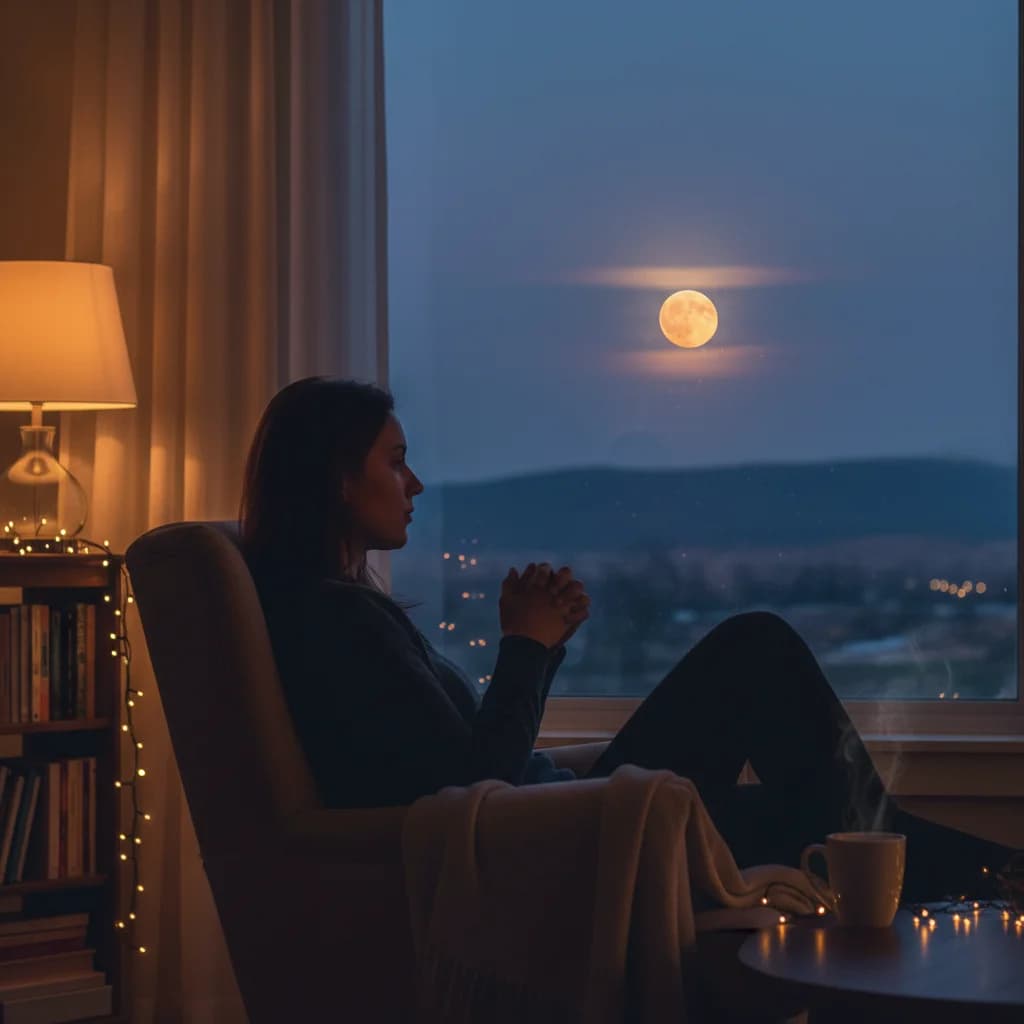
How the Moon Affects Your Mood, Energy and Body
Of all the celestial bodies in astrology, none is more intimately connected to the rhythms of daily human life than the Moon. While the Sun defines your core identity and the outer planets shape generational themes, the Moon governs something far more immediate: the ebb and flow of your emotions, the quality of your energy from day to day, and even the physical sensations you experience in your body.
Understanding how the Moon works in astrology — both in your natal chart and as it moves through the sky each day — is one of the most practical tools available for self-awareness and emotional intelligence.
The Moon in Your Natal Chart: Your Emotional Blueprint
Your natal Moon sign is determined by the position of the Moon at the exact moment of your birth. Because the Moon moves through all twelve zodiac signs in approximately 28 days (spending roughly 2.5 days in each sign), your Moon sign is highly specific to your birth time and date.
The natal Moon represents your emotional nature — how you instinctively react to the world, what makes you feel safe and nurtured, and what you need in order to feel emotionally balanced. It is the part of you that responds before you think, the inner child that needs comfort, and the body's intuitive intelligence.
| Moon Sign | Emotional Style | Core Need |
|---|---|---|
| Aries | Reactive, passionate, quick to anger and forgive | Freedom and immediate action |
| Taurus | Steady, sensual, slow to change | Physical comfort and security |
| Gemini | Curious, restless, emotionally communicative | Mental stimulation and variety |
| Cancer | Deeply sensitive, nurturing, protective | Emotional safety and belonging |
| Leo | Warm, expressive, needs recognition | To be seen and appreciated |
| Virgo | Analytical, self-critical, service-oriented | Order, usefulness, and routine |
| Libra | Harmony-seeking, indecisive, socially attuned | Balance and peaceful relationships |
| Scorpio | Intense, private, emotionally deep | Trust, transformation, and depth |
| Sagittarius | Optimistic, freedom-loving, philosophical | Adventure and meaning |
| Capricorn | Reserved, disciplined, emotionally controlled | Achievement and respect |
| Aquarius | Detached, unconventional, idealistic | Intellectual connection and independence |
| Pisces | Empathic, dreamy, emotionally porous | Spiritual connection and solitude |
How the Transiting Moon Affects Your Daily Mood
Beyond your natal Moon sign, the Moon's daily movement through the zodiac creates a shifting emotional weather system that affects everyone — regardless of their birth chart. When the Moon transits a particular sign, it activates the themes of that sign for all of us collectively.
On a Moon-in-Aries day, energy tends to be high, tempers run shorter, and there is a collective impulse toward action and initiative. On a Moon-in-Pisces day, the atmosphere becomes more dreamy, empathic, and spiritually attuned — but also more prone to confusion and emotional overwhelm.
When the transiting Moon makes contact with planets in your personal birth chart, the effect becomes even more specific. A transiting Moon conjunct your natal Venus, for example, often brings a day of warmth, social ease, and heightened appreciation for beauty. A transiting Moon square your natal Saturn may bring a day of emotional heaviness, self-doubt, or a sense of restriction.
The Moon and Your Physical Body
In traditional astrology, the Moon is strongly associated with the physical body — particularly the fluids, the digestive system, the breasts and stomach, and the lymphatic system. The Moon's sign and house placement in the natal chart can indicate areas of physical sensitivity or vulnerability.
More practically, many people notice that their energy levels and physical vitality shift with the Moon's phases. The New Moon is associated with low energy, rest, and new beginnings — a time when the body often calls for sleep and restoration. The Full Moon is associated with heightened energy, emotional intensity, and peak physical vitality — but also with disrupted sleep and heightened sensitivity.
Research into lunar cycles and human biology has found correlations with sleep patterns, hormonal cycles, and even surgical recovery times, lending some empirical support to what astrologers have observed for centuries.
The Moon's Phases and Emotional Cycles
The Moon's 28-day cycle mirrors many natural biological rhythms. Working consciously with this cycle — rather than against it — is one of the most accessible applications of astrology in daily life.
The New Moon (when the Moon and Sun are conjunct) is the optimal time for setting intentions, beginning new projects, and planting seeds for the future. The Waxing Moon (from New to Full) supports building, growing, and taking action. The Full Moon (when the Moon opposes the Sun) brings things to culmination, illumination, and emotional peak. The Waning Moon (from Full to New) supports releasing, reflecting, and letting go.
When the New or Full Moon falls in a sign that is prominent in your natal chart — or makes a close aspect to one of your natal planets — the emotional and physical effects tend to be particularly noticeable.
Explore Your Moon Sign and Daily Lunar Transits
Your natal Moon sign is one of the most important placements in your entire birth chart — and one of the most revealing for understanding your emotional patterns, physical sensitivities, and daily energy rhythms. At Astrology App, your free complete birth chart includes your Moon sign placement, house position, and the aspects it makes to other planets in your chart. Understanding your Moon is the first step toward understanding why you feel the way you feel — and how to work with your natural emotional cycles rather than against them.